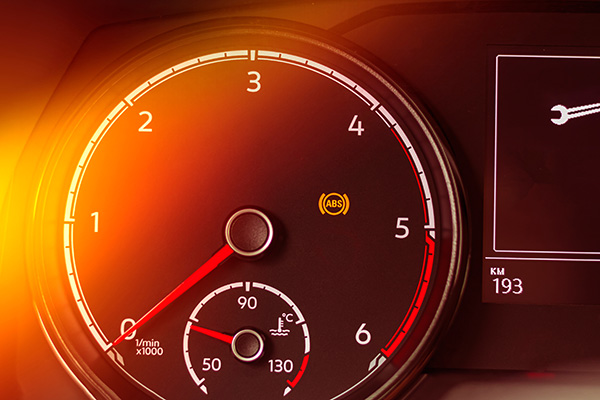
The ABS light has a way of showing up without much drama. The brakes may feel normal. The pedal may not change. The car may stop the same way it did yesterday. Then you see the warning and wonder if the brakes are still safe.
That is where the confusion starts.
The ABS warning light indicates a fault with the anti-lock braking system. Your regular brakes may still work, but the anti-lock feature may not work as it should during a hard stop, on a slick road, or during sudden braking.
What The ABS System Does
ABS stands for anti-lock braking system. Its job is to help prevent the wheels from locking up during hard braking. When the system works correctly, it can rapidly adjust brake pressure at individual wheels, keeping the tires from sliding.
You may feel the pedal pulse during a hard stop. That is normal when ABS is active. It does not mean the brakes are failing. It means the system is trying to help you stay in control.
When the ABS light stays on, the system has detected a problem and may deactivate the anti-lock function until the issue is resolved.
A Bad Wheel Speed Sensor
Wheel speed sensors are one of the most common reasons the ABS light comes on. These sensors tell the vehicle how fast each wheel is turning. ABS needs that information to know when a wheel is about to lock.
If one sensor fails, gets dirty, loses signal, or has damaged wiring, the system cannot trust the data. That can turn on the ABS light and sometimes the traction control or stability control lights too.
The warning may appear after driving a few miles, after hitting a bump, or right when the vehicle starts. That pattern can help one of our technicians decide whether the issue is persistent or intermittent.
Damaged Wiring Or Corroded Connectors
A wheel speed sensor may be fine, but the wiring to it may not be. Sensor wires run near the wheels, where they are exposed to water, road grime, ice, heat, vibration, and debris. Over time, wires can crack, rub through, corrode, or loosen at the connector.
A poor connection can create an intermittent ABS warning. The light may stay off for days, then return after wet weather or rough roads. That can make the problem feel random, but the system is usually losing the signal for a reason.
This is why testing matters. Replacing a sensor will not fix the light if the real problem is a broken wire or corroded connector.
Wheel Bearings And Tone Rings
Many ABS systems read wheel speed through a tone ring or magnetic encoder near the wheel bearing. If that ring is cracked, rusty, dirty, or damaged, the sensor may send an incorrect reading even when the sensor itself still works.
A worn wheel bearing can also create ABS trouble. If the bearing has play or internal damage, the sensor signal may become unstable. You may also hear a humming, grinding, or growling noise that changes with vehicle speed.
An inspection helps separate a sensor fault from a hub, bearing, or tone ring problem. The light may look the same on the dashboard, but the repair is not the same underneath.
Low Brake Fluid Or Brake System Issues
The ABS light can also appear when the brake system has a deeper concern. Low brake fluid, hydraulic problems, ABS pump issues, module faults, or pressure sensor problems can all be involved.
If the red brake warning light comes on with the ABS light, take it more seriously. That combination can point to a brake fluid or hydraulic issue, not just an anti-lock system fault.
Pay attention to pedal feel. A soft, low, or changing brake pedal should be checked quickly. The brake system should feel familiar every time you drive.
A Weak Battery Or Charging Problem
Modern braking systems depend on stable voltage. A weak battery, failing alternator, poor ground, or corroded terminal can confuse electronic systems, including ABS. Sometimes several warning lights come on at once when the voltage drops too low.
If the ABS light came on after a jump start, a dead battery, or a slow-cranking problem, the electrical system should be tested along with the ABS system. A low-voltage issue can make a healthy brake system appear to have a fault.
Regular maintenance helps catch weak batteries and dirty terminals before they start causing confusing warning lights.
Can You Drive With The ABS Light On?
If only the ABS light is on and the brake pedal feels normal, the vehicle may still have standard braking. The difference is that anti-lock braking may not assist during a hard stop. On dry pavement, you may not notice much. On ice, snow, gravel, or wet roads, the missing ABS function can matter.
If the red brake light is on, the pedal feels different, or braking performance changes, do not keep driving like normal. That needs faster attention.
The safest plan is to have the system scanned and tested soon. The stored code can point toward the wheel, sensor, circuit, or module that started the warning.
Get ABS Warning Light Service In Idaho, With Oswald Service and Repair
If your ABS light is on, or it appears with traction control, stability control, or brake warning lights, Oswald Service and Repair can perform an inspection at our Idaho Falls, ID, and Rexburg, ID, locations.
Schedule a visit and find out what caused the ABS warning before you need the system during a hard stop.