When you think about the most powerful components inside your vehicle, your mind probably visualizes large, heavy pieces of metal. You think of the heavy engine block, the complex transmission gears, or the sprawling exhaust system. It is natural to assume that the largest parts do the most significant amount of work.
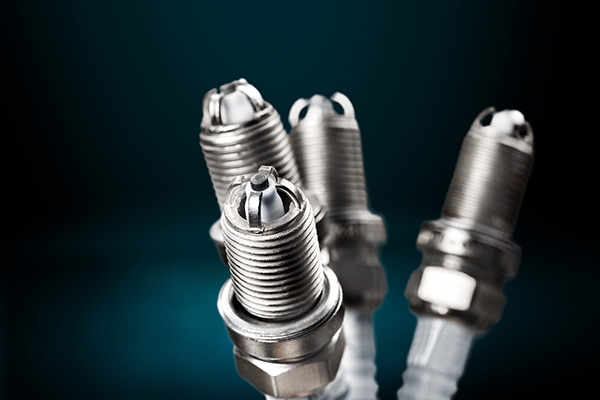
At our auto repair shop, we love revealing the hidden secrets of the engine bay to our customers. One of the most fascinating truths of automotive engineering is that your car's reliability often depends on a component no larger than a pocket lighter. We are talking about the spark plug.
If your engine is the heart of your vehicle, spark plugs are the electrical pulses that keep that heart beating. Despite their small size, a single failing spark plug can completely ruin your driving experience, tank your fuel economy, and potentially leave you stranded. Let us dive into the critical job these little components perform, how they wear out over time, and the signs that tell you your vehicle is begging for a fresh set.
The Tiny Lightning Bolts Powering Your Journey
To appreciate how much a spark plug affects your daily drive, you have to look at the violent environment inside an internal combustion engine. Your vehicle moves forward by mixing liquid gasoline with air inside the engine cylinders, compressing that mixture tightly, and exploding it to push down the heavy metal pistons.
The spark plug is responsible for creating that explosion. It sits at the top of the cylinder, receiving thousands of volts of high-voltage electricity from your ignition coils. It uses that power to bridge a tiny gap between two metal electrodes, creating a miniature, controlled bolt of lightning.
This happens at a speed that is difficult for the human brain to comprehend. When you are cruising down the highway, each individual spark plug in your engine is firing anywhere from fifteen to thirty times every single second. Over the course of a normal year of commuting, a single plug will fire tens of millions of times, enduring extreme heat and intense pressure cycles without a single break.
How Time and Miles Change Your Spark Plugs
Modern spark plugs are constructed using incredibly durable materials, including specialized ceramics and precious metals like platinum or iridium. However, no material is completely invincible against millions of electrical explosions.
As the miles pile up on your odometer, the metal tip of the plug slowly begins to erode away. This erosion causes the microscopic gap between the electrodes to widen over time.
When the gap becomes too wide, your car's electrical system has to work significantly harder to stretch that bolt of lightning across the open space. Eventually, the electricity will fail to make the jump entirely. When this happens, the fuel and air mixture inside that specific cylinder will not ignite, a failure mechanics refer to as an engine misfire.
Top Warning Signs Your Spark Plugs Are Worn Out
Because spark plugs degrade slowly over thousands of miles, you might not notice the gradual drop-off in performance right away. However, your engine will eventually start throwing out clear distress signals.
A Rough and Shaky Idle: When you are sitting at a red light or waiting in a parking lot, your car should feel smooth and relatively quiet. If you notice a strange vibration through the steering wheel, a rhythmic thumping sound, or a feeling that the engine is actively stumbling, you are likely feeling a cylinder misfire caused by a weak spark.
Sluggish, Unresponsive Acceleration: When you step on the gas pedal to merge onto a busy highway or climb a steep hill, your engine requires an instantaneous, clean burn of fuel. Worn-out plugs cannot keep up with the sudden demand for rapid fire, making your car feel heavy, slow to react, or jerky when you try to speed up.
Poor Fuel Economy and Frequent Fill Ups: If you notice that you are visiting the gas station much more frequently than usual, your ignition system is likely to blame. When a spark plug fails to ignite the fuel completely, that unburnt gasoline simply gets pushed out through the exhaust pipe, completely wasted, dropping your fuel efficiency by up to thirty percent.
Hard Cold Starts in the Morning: Your engine requires a lot of extra energy to start up when the metal components are cold. If your plugs are old and fouled with carbon deposits, they will struggle to create a strong enough arc to get the fire started, causing the starter to crank for an uncomfortably long time before the engine catches.
Let Us Restore Your Engine's Factory Performance
The good news about spark plugs is that replacing them is one of the most cost-effective ways to completely revitalize your vehicle's performance. Upgrading to a fresh set can instantly bring back that crisp acceleration, smooth out your morning idle, and keep your fuel costs as low as possible.
Do not let a set of worn-out plugs drain your wallet at the pump or compromise your safety on the highway. If your car has passed the one-hundred-thousand-mile mark, or if you are dealing with a moody idle and a glowing check engine light, bring your vehicle to Oswald Service and Repair in Idaho Falls and Rexburg, ID.
Give us a call or pull right into our shop today to schedule an inspection.