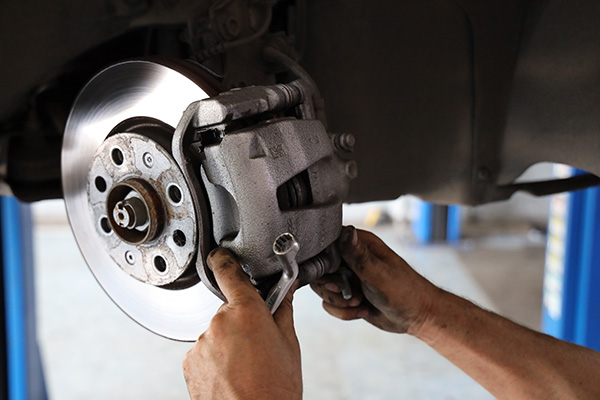
The outside brake pad still has material left, but the pad behind the rotor is nearly gone. Or one end of a pad is noticeably thinner than the other. Those findings can surprise an owner who hasn't heard grinding and was expecting a simple pad replacement.
Before installing new pads, you need to explain the uneven wear. A dragging piston, restricted slide movement, or a pad stuck in its bracket can each prevent even operation. The worn pad provides evidence, but its location alone isn't enough to decide what to replace.
Start With the Type of Caliper
Many passenger vehicles use a floating caliper. Its piston pushes one pad against the rotor while the caliper slides to apply the pad on the opposite side. The slides must move freely enough for both sides to apply and release as intended.
A fixed caliper works differently, using pistons on both sides rather than the same floating arrangement. That distinction changes the diagnosis. Advice about stuck slide pins doesn't apply to every brake assembly. The technician first identifies the design, then compares pad thickness and wear across both wheels on the axle.
Slide Pins Can Bind Without Looking Bad Outside
A torn boot can let water reach a slide pin, and corrosion can interfere with movement inside the bore. Incorrect lubricant or a damaged rubber sleeve can create trouble too. A pin that moves only a short distance may not move freely through the full travel as the pads wear.
We remove and inspect the relevant pins, boots, and bores instead of only checking whether the assembled caliper wiggles. Pitting, binding, or a swollen sleeve needs correction using suitable parts and lubricant. Grease won't restore a badly damaged bore. The repair also needs to address how water got in, or the replacement pin may develop the same problem.
A Piston Can Keep a Pad Applied
The piston needs to advance as the pads wear and release enough pressure after braking to avoid excessive drag. Corrosion, seal damage, or other internal problems can interfere with that movement. An affected brake can run hot, smell like burning, or wear much faster than its partner on the same axle.
Resistance when retracting a piston is useful evidence, but the procedure must match the caliper. Rear calipers with integrated parking brakes can require a special method or electronic service mode. Forcing them back with the wrong tool risks damage and doesn't fairly test whether the original piston was sticking.
Pads Can Stick in the Bracket Too
The pads themselves must move in their intended contact points. Corrosion beneath retaining clips can tighten the space around the pad ears. Debris, distorted hardware, or an incorrect fit can leave the pad hanging up even when the piston and slide pins are usable.
Tapered or unequal wear therefore doesn't identify a single failed component. Check the pad fit after evaluating the bracket contact surfaces and hardware. Grinding away large amounts of a pad to make it fit is not a substitute for finding corrosion, damaged hardware, or an incorrect part.
Trapped Hydraulic Pressure Can Mimic a Stuck Caliper
A brake hose can deteriorate internally and interfere with pressure returning after a stop. Other hydraulic faults can also leave pressure applied. From the driver's seat, the result resembles a seized caliper: drag, heat, or a pull, sometimes becoming more pronounced after several miles.
A technician can test whether releasing trapped hydraulic pressure changes the drag, using the appropriate service procedure. If it does, the cause needs to be traced upstream rather than replacing a caliper automatically. Don't open fittings or loosen bleeders as a roadside experiment. Brake fluid loss or introduced air creates another safety problem.
The Finished Repair Needs Even Application and Release
An inspection should document the wear on all affected pads, rotor thickness and condition, slide movement, piston operation, and any hydraulic concerns. That separates a serviceable caliper needing hardware work from an assembly with internal damage. Some replacement calipers don't include every bracket or slide component, so check the parts supplied too.
Pad replacement is generally done as an axle set, with rotors serviced or replaced based on measurements and condition. After the repair, pedal operation, braking balance, and release should be verified. Mention uneven wear during regular maintenance so the next check can compare sides rather than merely looking at the easiest outer pad.
Get Uneven Brake Wear Diagnostics In Idaho With Oswald Service and Repair
Oswald Service and Repair serves Idaho Falls and Rexburg, ID, and can determine whether uneven pad wear involves the slides, piston, bracket, or hydraulic system.
Contact us to arrange a brake check before another set of pads wears unevenly.